By Antares and Crono Servizi
From quantity to quality: a must to generate added value in the EVOO chain.
While it is possible to say that a large part of the products that end up on our table depend on the quality of the raw material and the care in processing capacity, olive oil in the extra virgin segment is distinguished from any food by the functional and organoleptic characteristics that the raw material imparts to the final product. Virgin oil produced from olives can be considered a functional/nutraceutical food.
A functional food is similar in appearance to a conventional one, is consumed as part of a customary diet, provides physiological benefits and/or reduces the risk of chronic diseases through basic nutritional functions and in relation to specific constituents.
In olive cultivation practices based on traditional methods, the main cost of production (up to about 84% of the direct cost to produce one kg of olive oil) is related to the cost of harvesting and preparing the soil and the trees. The cost of milling and processing and transport is responsible for the remaining 16% of the final cost (IOC data 2015). This figure alone would be sufficient, from an economic perspective, to remind us of the centrality of soil and raw material preparation for olive oil as the phase where most of the costs reside.
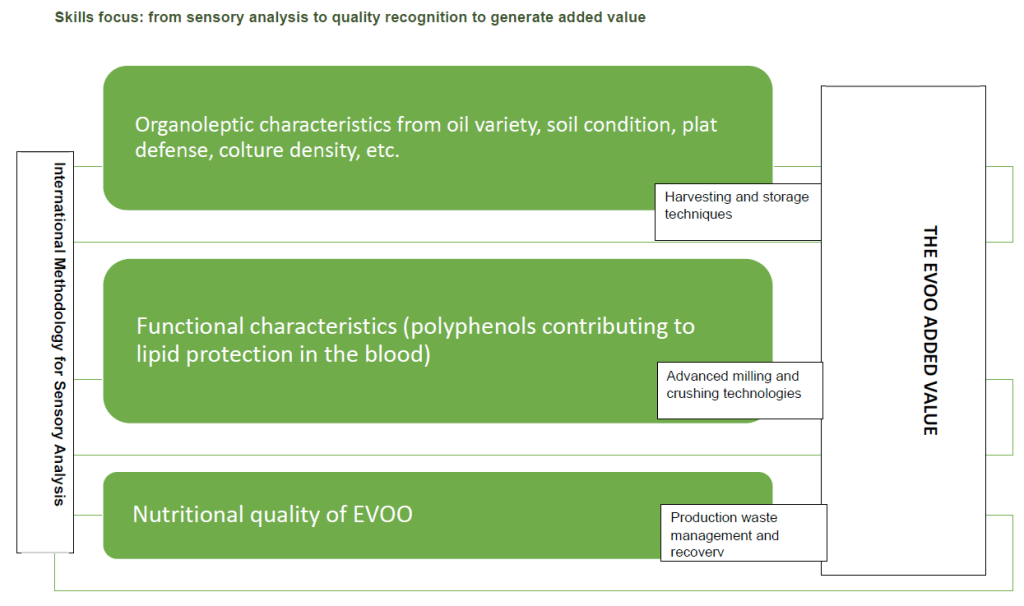
So where does the added value of extra virgin olive oil production lie? The paradox of the supply chain lies in the cost structure that for non-intensive crops, which therefore ensure a high degree of care for the production of local varieties, implies that margins have to be built up along the supply chain after the harvest phase. Here too, however, the need for increasingly advanced milling technologies reduces margins. According to available estimates, the final selling.
The EVOO added value is strongly based therefore on the “art” of advancing skills pertaining to olive oil genotype and agronomic preparation and full knowledge of organoleptic charactarisation, functional characteristics and nutritional quality.
 EVOOlution